
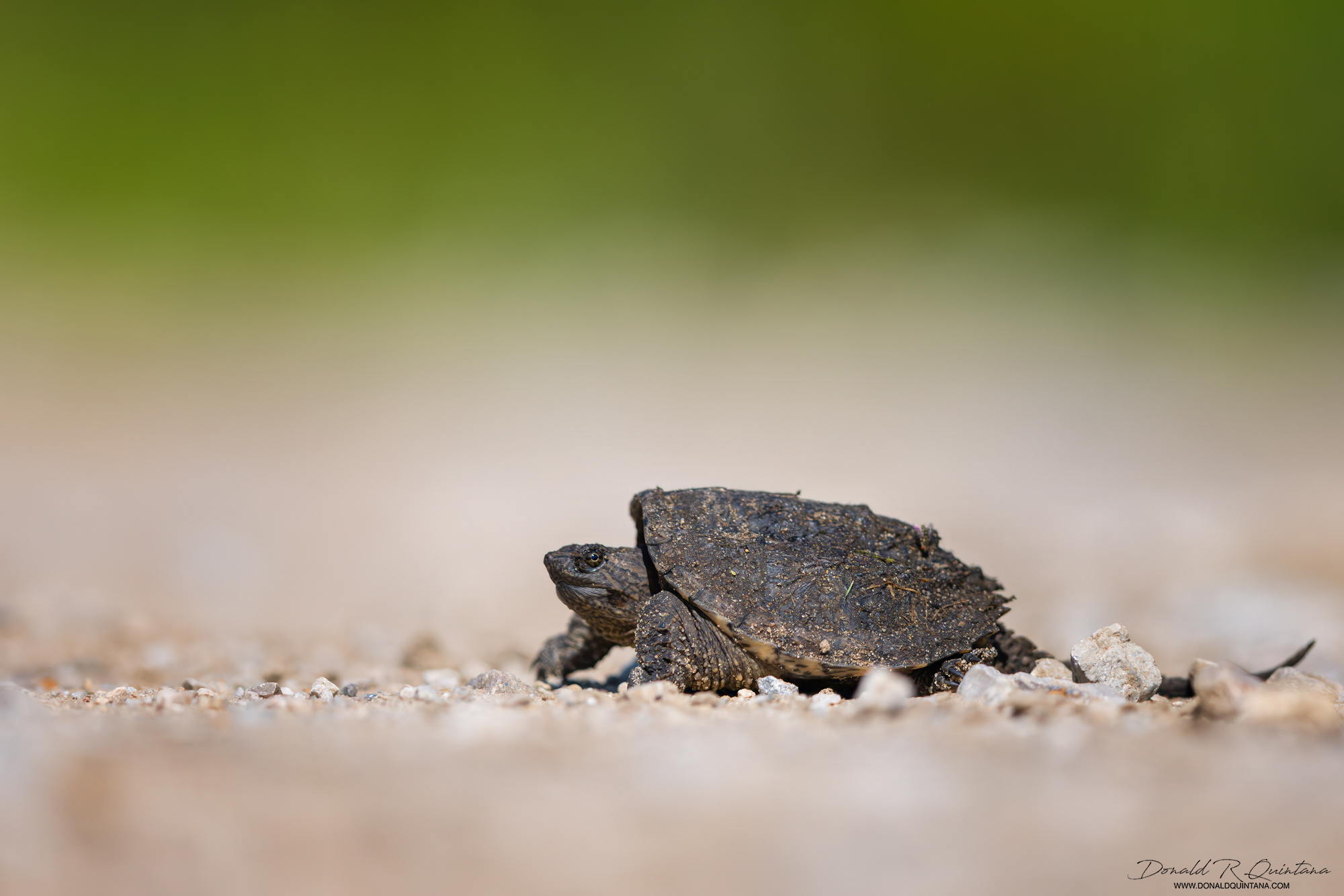
Sometimes the best subjects are the ones nature places directly in your path. We encountered this juvenile snapping turtle crossing a road at Hawkeye Wildlife Management Area and stopped to help it safely continue in the direction it was already heading.
If you know me, you know how much I enjoy spending time in our National Wildlife Refuge System. Having lived in California for most of my life, I spent countless mornings exploring and leading photography tours through the refuges of the San Joaquin Valley, particularly the Merced and San Luis National Wildlife Refuges. Those areas gave me the opportunity to experience large concentrations of wildlife, observe the changing seasons, and introduce other photographers to the incredible birds and landscapes found there.
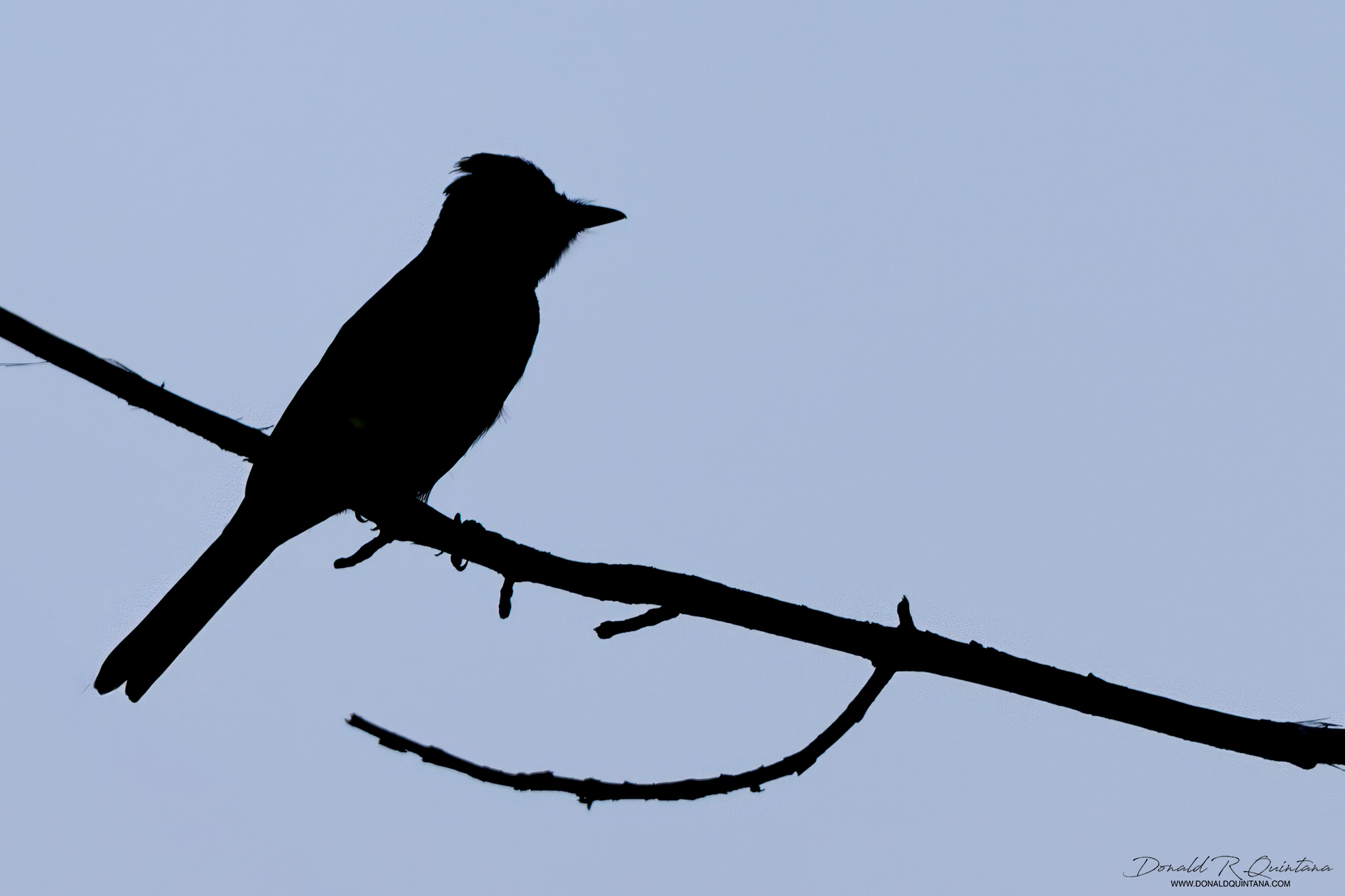
The distinctive silhouette of a Great Crested Flycatcher perched above us. These birds are among the species I commonly encounter while exploring Hawkeye Wildlife Management Area during the summer months.
Although I now live in Iowa, those California refuges remain very special to me. I have another Merced National Wildlife Refuge photography tour planned for March 2027, and I would love the opportunity to return to California and once again share that remarkable experience with a small group of photographers.
Most of my morning photography adventures begin the same way, with a stop somewhere for coffee and a premade egg sandwich before heading out into the field. It has become part of the ritual. With breakfast and coffee in hand, I can settle in for the drive and begin wondering what the day might bring.
Here in Iowa, the closest place I have found to those California refuges is the Hawkeye Wildlife Management Area near North Liberty. A wildlife management area is a little different from a National Wildlife Refuge. National Wildlife Refuges are part of a federally managed system devoted primarily to conserving wildlife and habitat. Iowa’s wildlife management areas are managed by the Iowa Department of Natural Resources to protect and improve habitat while also providing opportunities for hunting, fishing, wildlife watching, photography, and other forms of outdoor recreation.
Encompassing approximately 14,000 acres of timber, wetlands, marshes, and upland habitat, Hawkeye gives me a place to get out into the wilder areas of Iowa and photograph many of the birds and other species found here. At this time of year, I commonly encounter Great Crested Flycatchers, Northern Cardinals, Eastern Kingbirds, Indigo Buntings, and American Goldfinches, Iowa’s state bird.
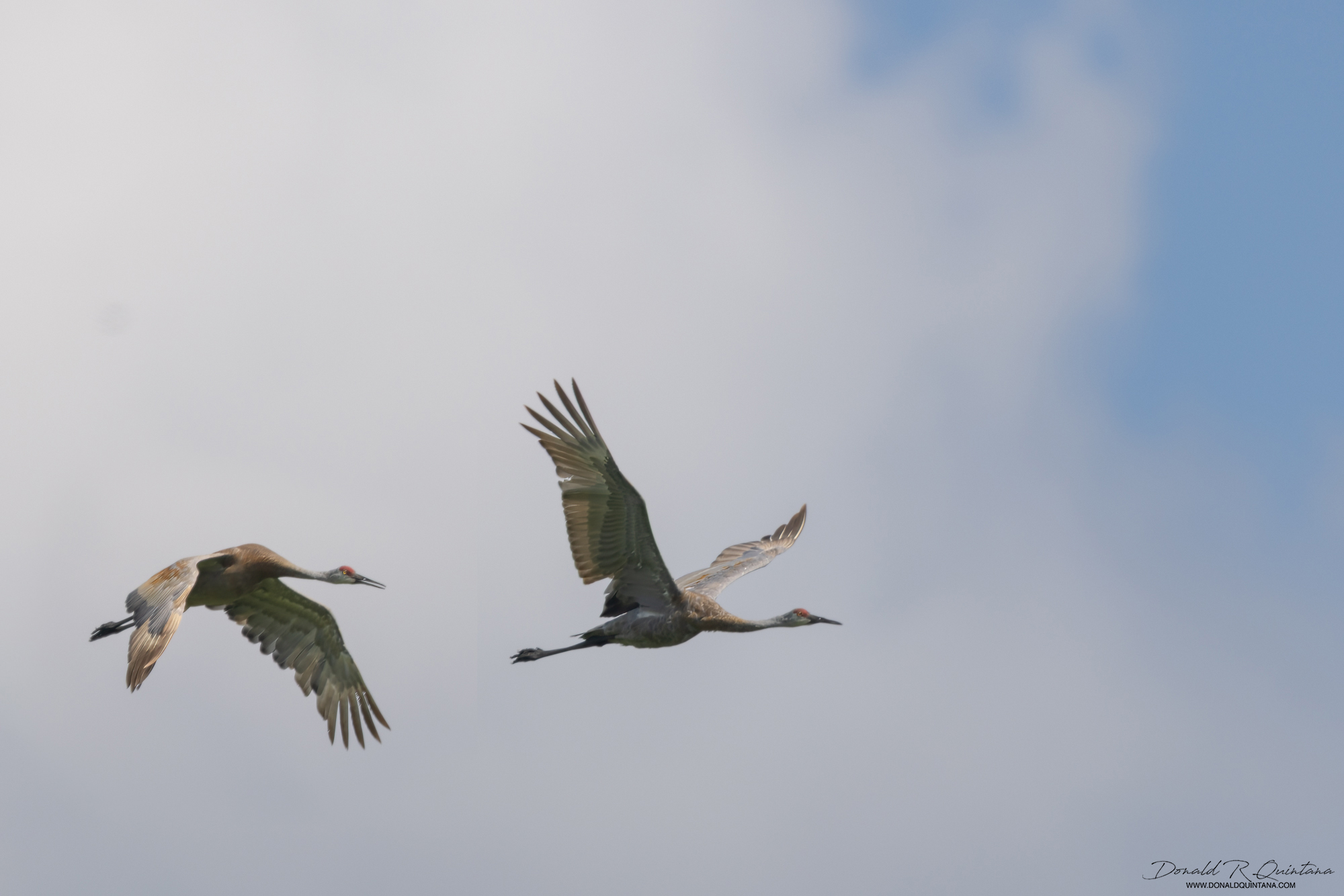
Two Sandhill Cranes surprised us as they flew overhead. They did not remain in view for long, but seeing these large, prehistoric-looking birds is always an exciting part of a day in the field.
During this particular visit, two Sandhill Cranes surprised us with a flyby. They did not stick around for long, but seeing those large, prehistoric-looking birds passing overhead is always exciting. A little later, we encountered a much slower traveler, a juvenile snapping turtle attempting to cross the road. We stopped and helped it safely continue in the direction it was already heading.
Near the end of our drive, we returned to an area where we had discovered nesting Brown Thrashers earlier in the spring. The nest was now abandoned, but while checking the area, we noticed several interesting insects among the Common Milkweed plants. Milkweed seems to grow almost everywhere here in Iowa, and I am always happy to see so much of it because of the important habitat it provides.
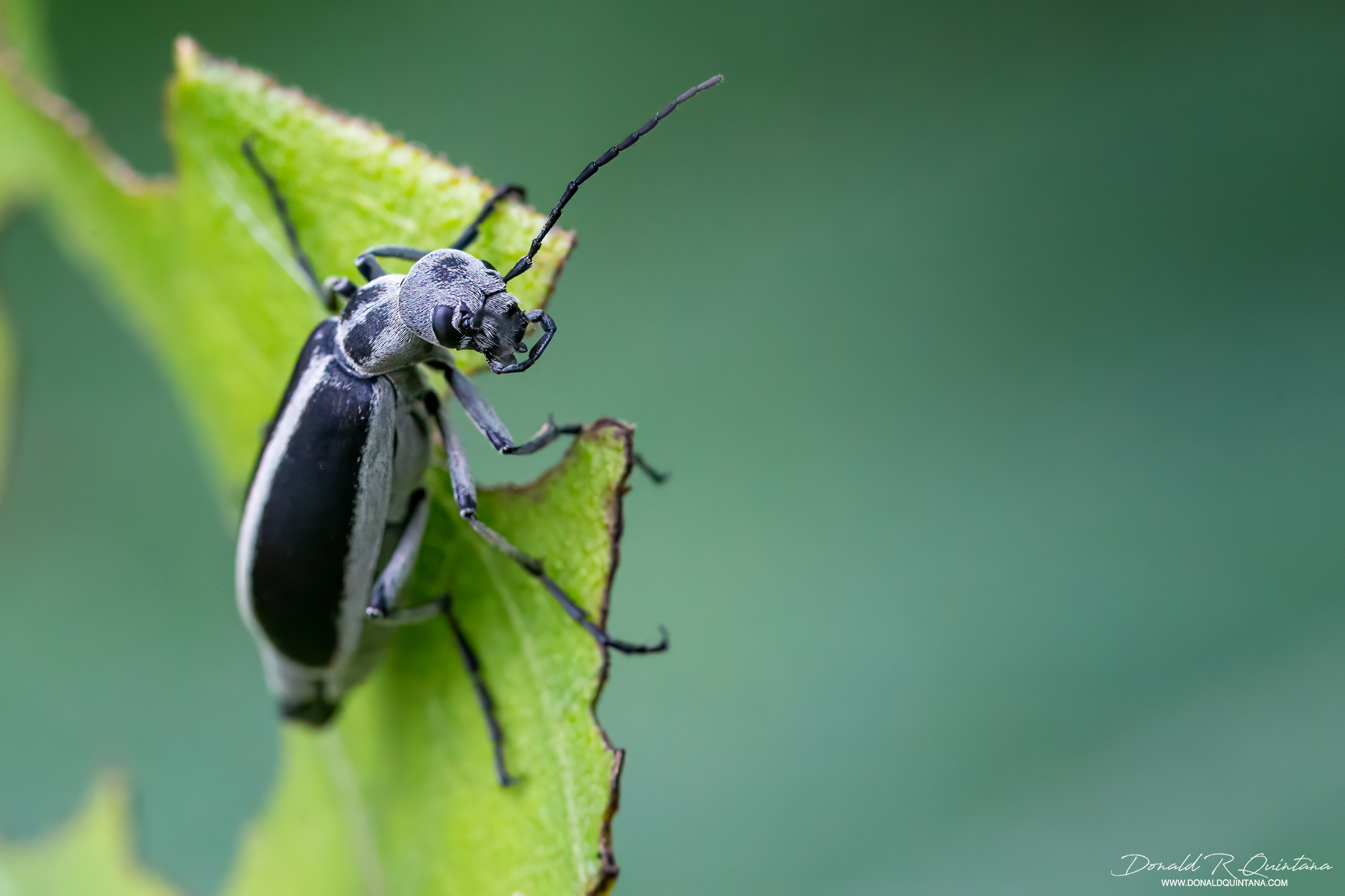
A Margined Blister Beetle, Epicauta pestifera, rests on a Common Milkweed plant. These fascinating beetles produce cantharidin, a chemical that can irritate the skin and cause blisters, so this was definitely a subject to photograph without handling.
One of our discoveries was a Margined Blister Beetle. This is not an insect you want to handle. Like other blister beetles, it produces a chemical called cantharidin that can irritate the skin and cause blisters, which explains how the beetle earned its name. Nearby, we found a much more adorable subject, a tiny Two-striped Grasshopper nymph resting among the vegetation.
One of the things I enjoy most about nature photography is that you never really know what will become the subject of the day. We may begin the morning looking for birds, but if we remain observant and curious, a turtle crossing the road, an unusual beetle, or a tiny grasshopper can become just as interesting. The best subject is often the one nature places in front of you.
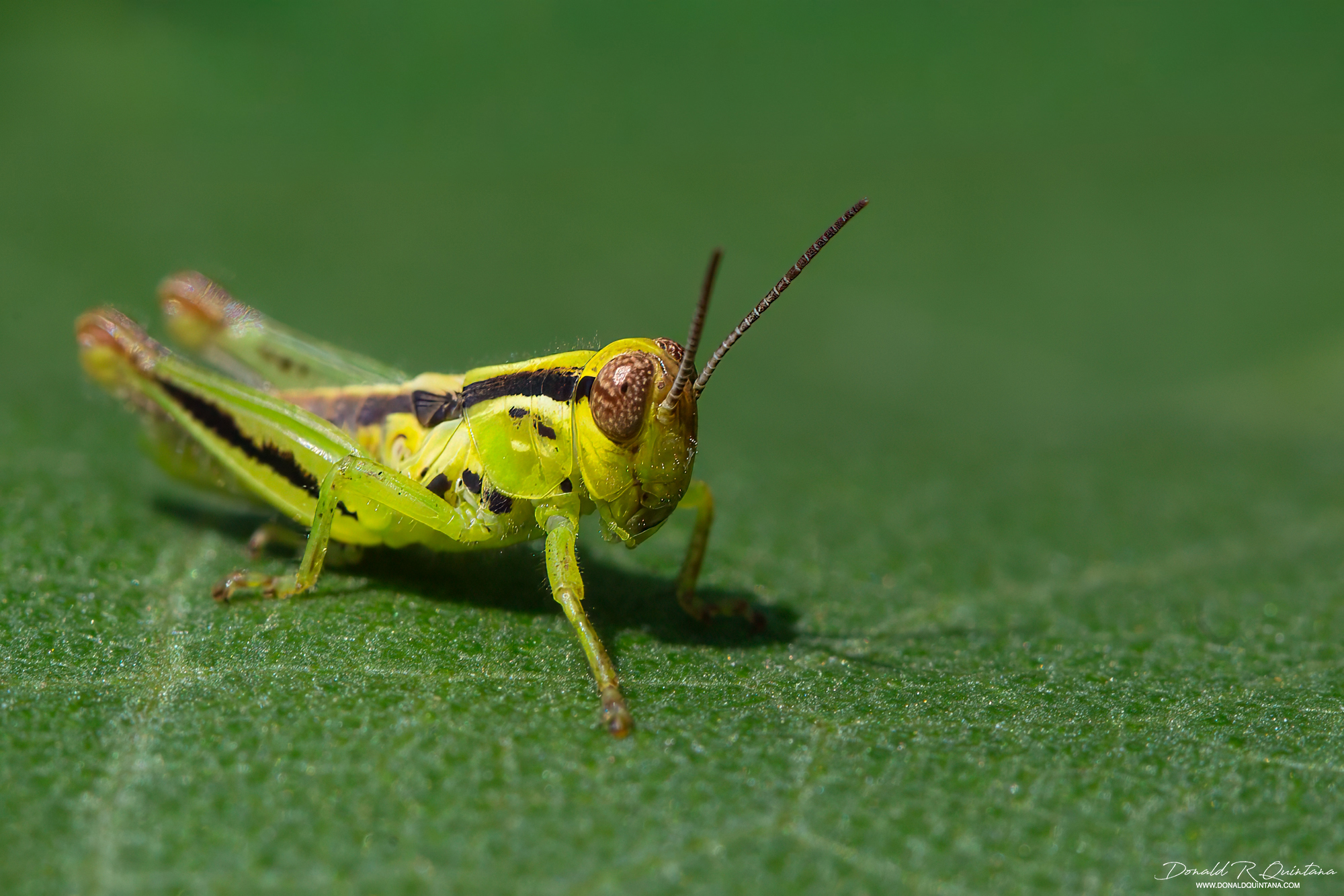
A tiny Two-striped Grasshopper nymph rests among the vegetation. Its bright green coloring helped it blend into its surroundings, but a closer look revealed an expressive and surprisingly adorable little subject.
All in all, it was a good morning, but the day was far from over. Our afternoon took us to Cone Marsh Wildlife Management Area, and then, somehow, we continued driving east until we reached the Mississippi River. We enjoyed dinner at a local restaurant before turning back toward Cedar Rapids and making the drive home as the sun began to set.
Sometimes the best photography adventures are the ones that begin with a cup of coffee, an egg sandwich, and only a general idea of where you are going. You follow the roads, remain open to whatever crosses your path, and allow the day to unfold.
Days like this remind me why these wild places matter so much to me, whether I am exploring Hawkeye Wildlife Management Area here in Iowa or returning to the wildlife refuges of California. Each place has its own character, its own rhythms, and its own stories waiting to be photographed.
I hope to return to the Merced and San Luis refuges in February and March 2027, this time with a small group of photographers ready to experience one of California’s great winter wildlife gatherings. If you would like to join me, you can learn more about the upcoming tour below.